
Turkish Delight
STUDYO LONDON talks to burlesque performer Turkish Delight about her inspirations, orientalism, accessibility and queerness.
Your persona is inspired by Nejla Ates, the Turkish belly dancer dubbed ‘Turkish Delight’ in 1950s Hollywood. What drew you to her specifically, and what does it mean to you to carry that name forward in a very different context?
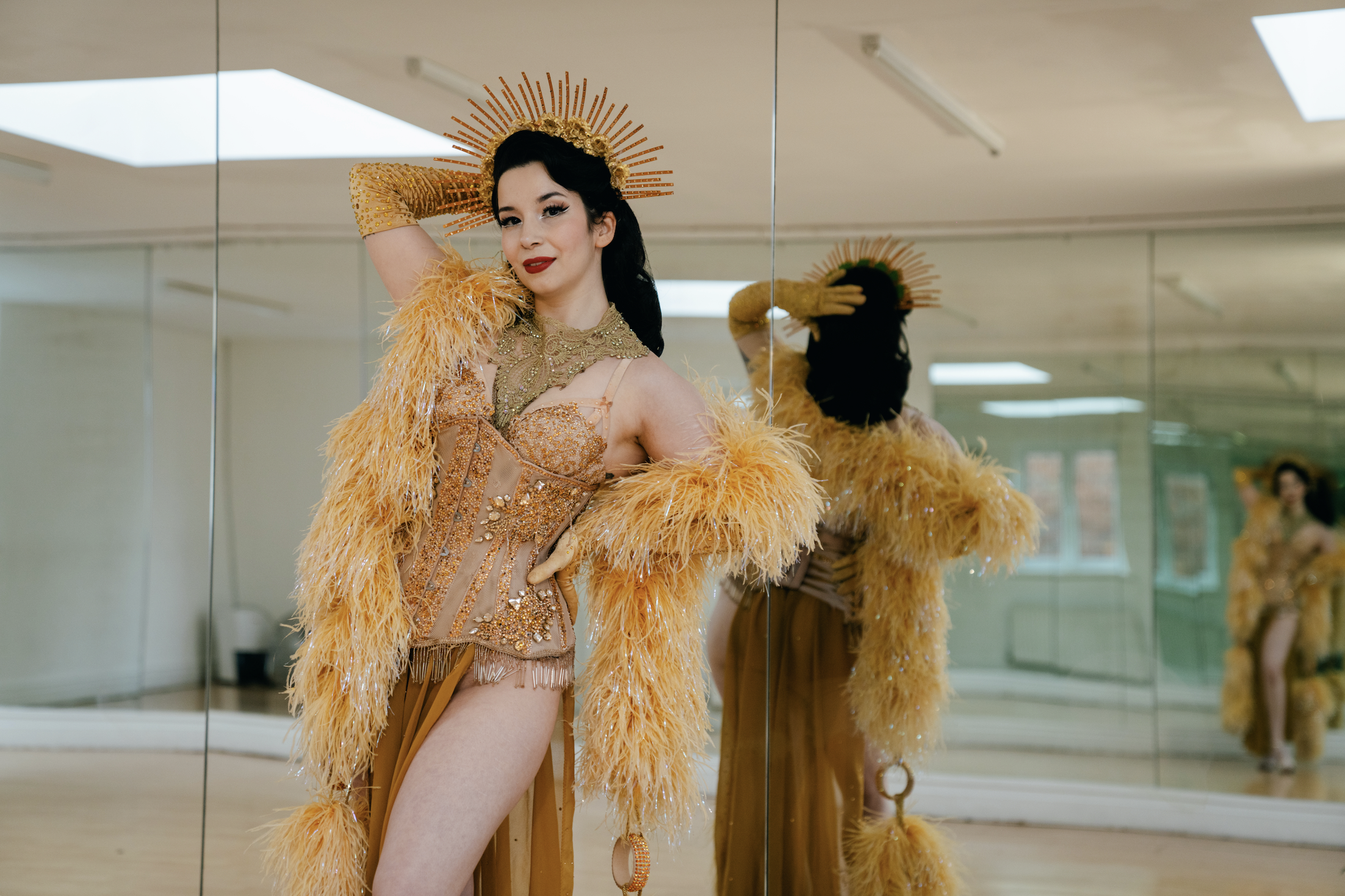
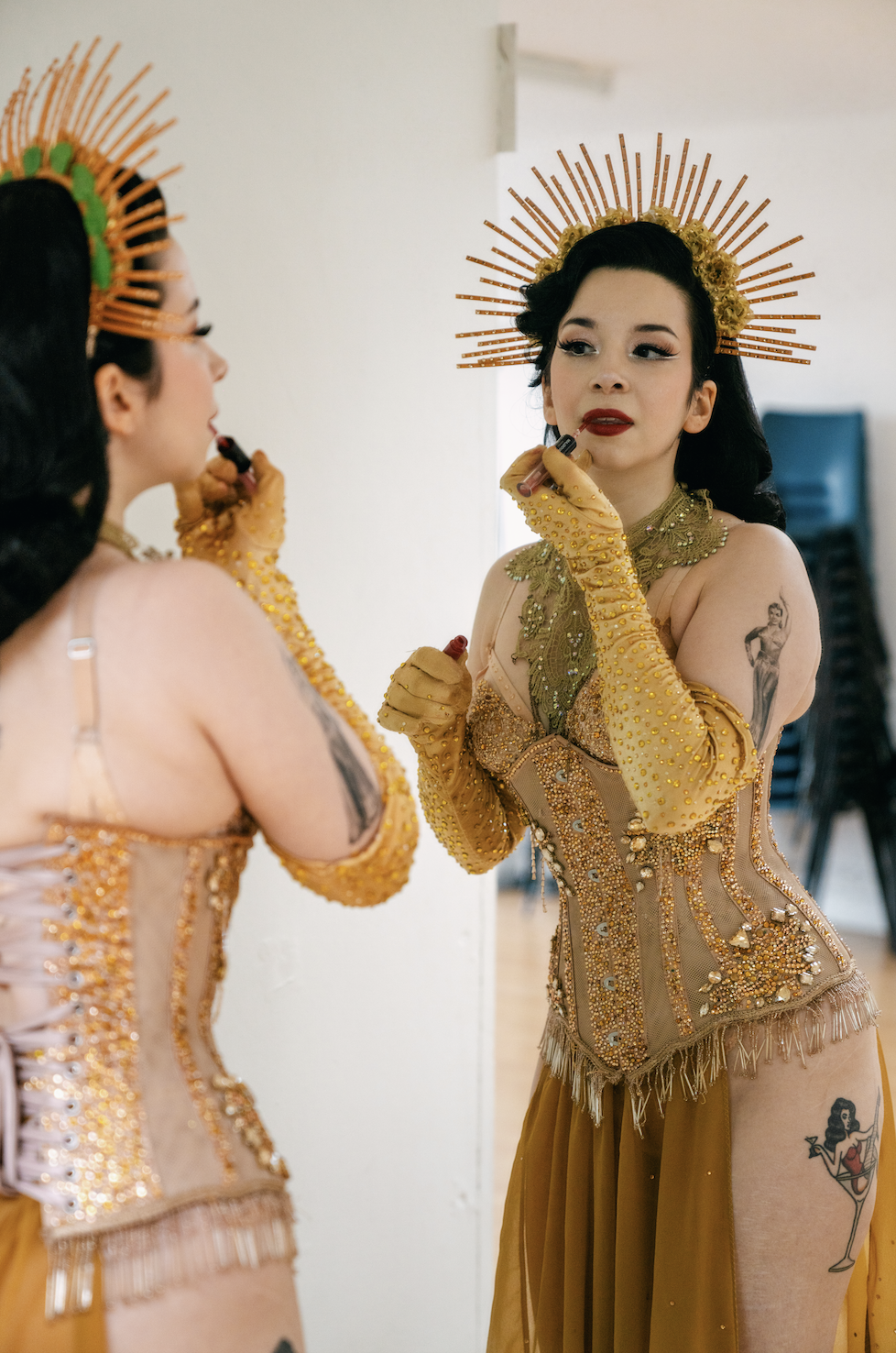
When I was first starting out in burlesque, I did some research to see if I could find any other Turkish burlesque performers. I actually couldn’t find anyone else. I wanted to use the name ‘Turkish Delight’ as a way to trailblaze Turkish burlesque, and I wanted to double-check that no one was performing under this name. This is when I came upon Nejla Ates. I was completely in awe — I had never heard of a Turkish dancer gaining this much recognition and success globally before her. Even though she specifically said in multiple interviews that she does not do burlesque, there are quite a few photographs of her belly dancing wearing nipple pasties. Taking on the name Turkish Delight was an opportunity to honour her memory and legacy, whilst also carving a way for myself in this industry. I have a tattoo of her on my arm as well, and I feel like I carry her with me always. It would be a dream to have met her in person.
You have a BA and MFA in Dance and Choreography, and you've written academic papers on burlesque. How can academia and cabaret inform each other as disciplines, and do you employ these techniques in your own work?
We have different subgenres of burlesque, the main two being classic and neo. In academia, neo-burlesque is often regarded as the revival of classic burlesque, focusing mainly on the present-day period. In the burlesque industry, however, neo-burlesque is a style of burlesque that’s 'out of the ordinary' and challenges classic burlesque norms through the movement style, costume, theme, and music.
During my BA at the Guildford School of Acting, I focused on neo-burlesque audience-performer power dynamics. When I did my MFA at the University of Roehampton, my focus shifted more towards the bodily politics of burlesque and the implications of costume, the naked body, and the stripping body. One of my studies was on the nipple pasty as weapon and the #freethenipple movement. Nipple pasties were used in burlesque as a way to navigate nudity laws. Whilst we still use them as a way to give acknowledgement to the past and navigate current nudity licensing laws, they also bring up conversations about the female nipple, which is often censored in multiple media whilst its non-female counterpart is treated differently. My finishing thesis was an exhibition at the university regarding stripping bodies and the word 'ecdysiast.' This term is often used to describe strippers, as 'one who sheds their skin'. In my exhibition 'Ecdysiast', I explored likenesses between burlesque performers shedding their costumes and reptiles shedding their skin as a way to navigate the politics of disrobing.
You're also a certified Dance-Movement Psychotherapist. Tell me more about that as a therapeutic practice.
I’ve been a dance teacher since 2012, and my own experiences with mental illness and disability have guided my teaching style over the years. While I don’t currently practice DMP (Dance Movement Psychotherapy), I felt it was a valuable qualification to obtain to make sure I was creating safe teaching environments. In addition to DMP, I’m also qualified in first aid, mental health first aid, and safeguarding. I’ve an enhanced DBS check and have worked closely with the Royal Academy of Dance on their Certificate in Ballet Teaching Studies as an ambassador. Whilst having qualifications and knowledge about physical safety in dance, I think it’s crucial to have similar knowledge and qualifications in the mental aspect.
You've got acts like 'Kebab' and 'Istanbul D'Light' sitting alongside 'Swan Lake' and 'Twilight.' Is there a through-line in how you build an act, or does each one come from a completely different place?
When I first started burlesque, my intention behind creating acts was purely based on the things I loved and the things I’ve been keeping hidden all my life. For example, my ‘Twilight’ act (which is currently semi-retired) was based purely on my love for the cult movie series. Having more experience in this industry has affected my act creation process. Right now, I maintain a balance between acts I want to create for myself and acts I know will get booked in the current industry. This shift happened for me when burlesque became my full-time job. I currently have three act types that get booked the most, and I’m very happy with how much joy the variety has been bringing me:
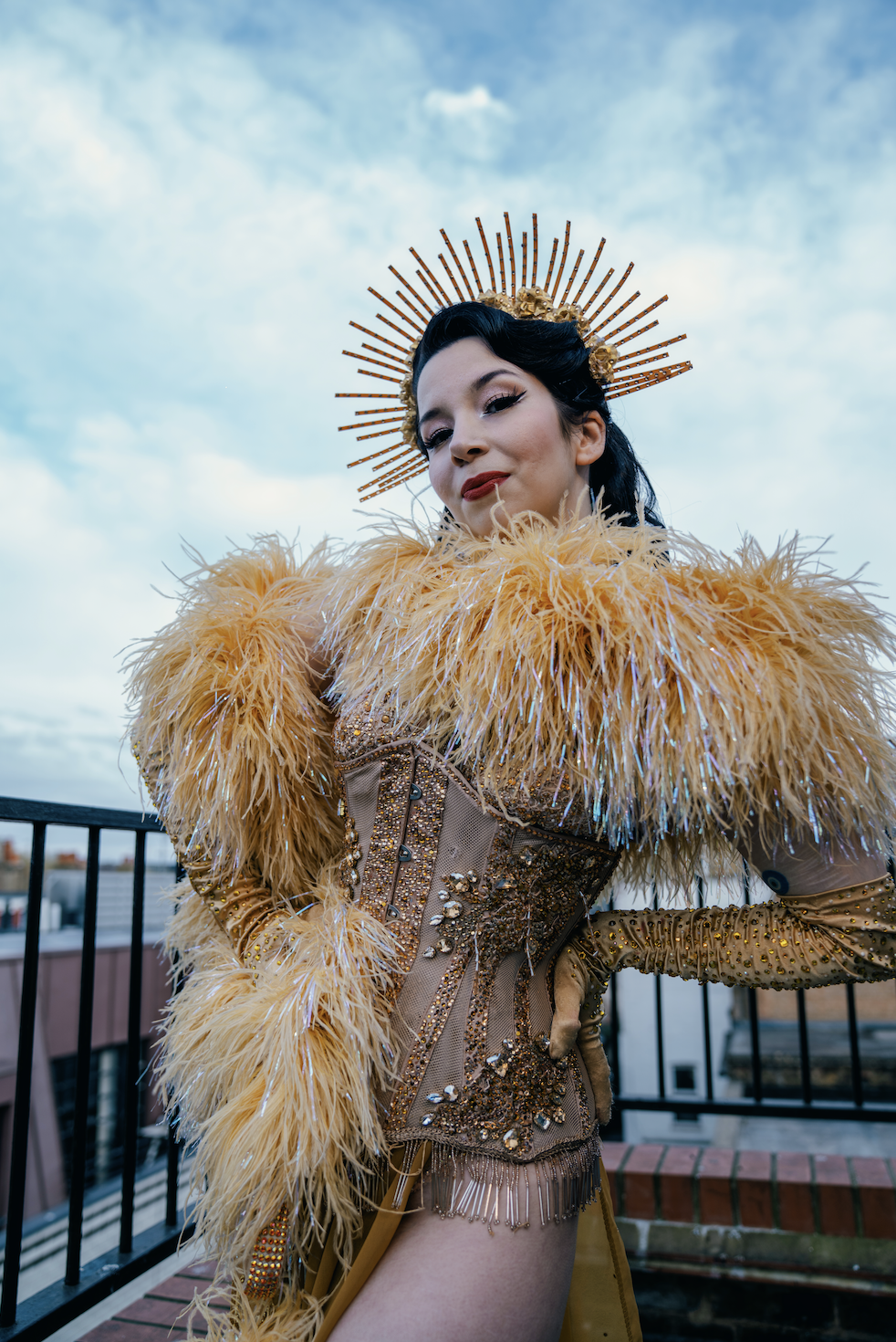
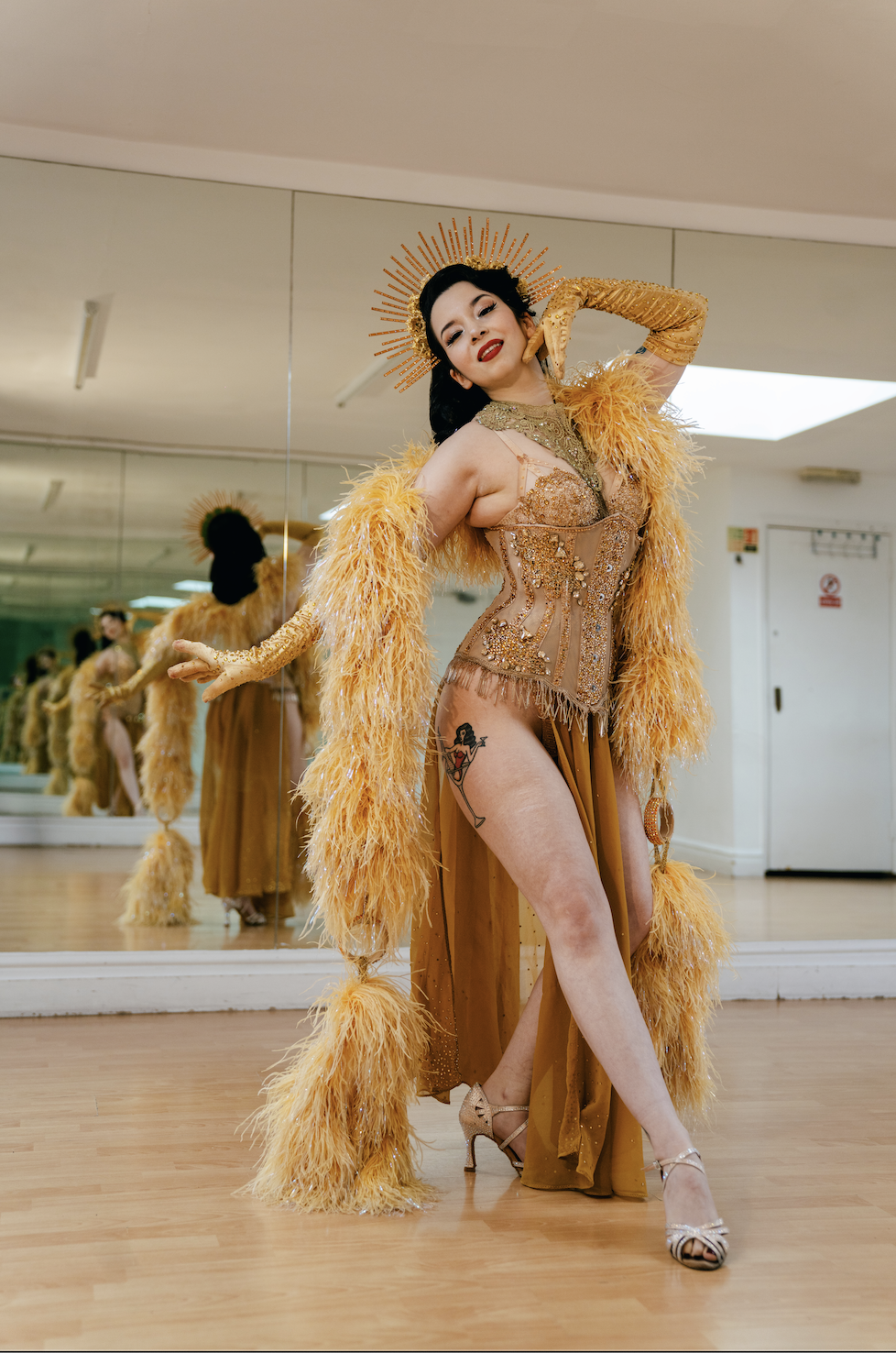
1. High-end showgirl-style acts with extravagant costumes such as my ‘Miss Kiss Kiss Bang’, ‘I’m a Good Girl’ and ‘Goldfinger’ acts.
2. Cultural acts such as ‘Istanbul D’Light’ and ‘Beautiful Liar’ that feature my unique blend of burlesque and belly dance.
3. Comedy neo-burlesque acts like ‘Kebab’ and my most recent ‘Turkish Ice Cream Man’ act that are great for drag shows and also consistently go viral on social media – which is an important part of the job, in my opinion. Depending on the season, I also have some Christmas and Halloween acts that are booked most often.
Your academic work includes a piece on orientalism and power dynamics in neo-burlesque. Firstly, could you explain to the unknowing viewer what exactly neo-burlesque is?
Neo-burlesque, to put simply, is any burlesque act that is ‘out of the ordinary’ and not the classic burlesque style.
When you're performing acts that draw on Turkish and Middle Eastern imagery, how do you navigate the line between reclaiming that imagery and potentially reinforcing it for an audience who might not read the irony?
I only perform my acts that draw on Turkish and SWANA (South West Asian North African) imagery in spaces where I feel safe to do so. I have had instances where I performed these acts in spaces that left me feeling ‘othered’ and fetishised, so I am very careful about where I choose to share my culture on stage.
You produced Cabaret Identitease, a show with an entirely disabled, neurodivergent or chronically ill cast. What does it take to make a cabaret production accessible?
No production and no event will ever be fully accessible. Accessibility is not ‘one size fits all’, and everyone needs different accommodations. The best advice I can give is to talk to performers and audience members about what their needs are rather than making assumptions. If a person looks able-bodied, they might not actually be. Communication is key.
You joined Harem of No One in 2022 and described finding a family there. What does being in a collective give you?
When I first started burlesque in the UK, I didn’t know where I belonged. Once I saw Harem of No One on Instagram, I knew I had to message them and connect. They’ve very graciously welcomed me with open arms from the very first show I did with them, and they have become my chosen family. It was the first time I ever heard Turkish being spoken backstage. Watching our songs and culture onstage felt very special.
Harem of No One centres SWANA and queer artists. In a city like London with no shortage of queer cabaret, what do you think still needs to change about who gets platformed and how?
I think we still have a lot more work to do in terms of platforming global majority performers. Usually, there’s only one token global majority performer per show, and that’s just not good enough, especially considering the amount of global majority talent we have in the UK. I’m also seeing a rise in acts that are appropriating other cultures, which I think needs to stop. If we like a certain culture, we can support and book performers who belong to that culture instead.
You founded the UK Cabaret Directory and Burlesque Casting Calls UK. What problem were you solving?
I’ve had a few instances myself and heard from a few other performers of newer performers taking pre-existing performer names. In our industry, we rely mainly on researching pre-existing names rather than obtaining a trademark for our performer names, which, of course, is not financially accessible for everyone. I wanted to create a directory inclusive of as many UK cabaret performers as possible, as an accessible way to check existing names. It’s also beneficial if a performer or producer is looking for contact details for other performers or producers if they have opted in to share their contact details. Similarly, with Burlesque Casting Calls UK, I wanted to create a space where all cabaret casting calls could be accessed in one place. Especially for newer performers, finding casting calls to apply to can be very overwhelming.
You're currently touring with Forbidden Nights' Tease Live, which is a much bigger commercial production. How does that feel different from the underground queer cabaret spaces you've built your practice in?
I feel so incredibly grateful to have the opportunity to co-headline Tease Live. We’ve performed at so many incredible theatres and met thousands of fans across the UK, and it’s honestly a dream. I’ve definitely had to adjust my acts and costumes to fit bigger theatres, as well as the audience interactions I had choreographed in my acts. Often, the stage is not close enough to audiences for up-close interactions.
You won Legend in the Making at Hebden Bridge in 2023, and have been ranked among the top 10 burlesque performers in the UK and the top 50 worldwide. Does recognition from within the burlesque world matter to you? How does it impact your work?
Again, I’m so grateful that my work has been recognised in multiple ways, but I believe winning or not winning competitions, or placing or not placing in a list, does not affect the validity of a performer. I know so many incredible and breathtaking performers without any accolades who are absolute trailblazers in our industry. With its effects on my work specifically, though, I’ve noticed my Kebab act, which won Legend in the Making, has since become one of my most booked acts.
TURKISH DELIGHT IN CONVERSATION WITH STUDYO LONDON