
Naz
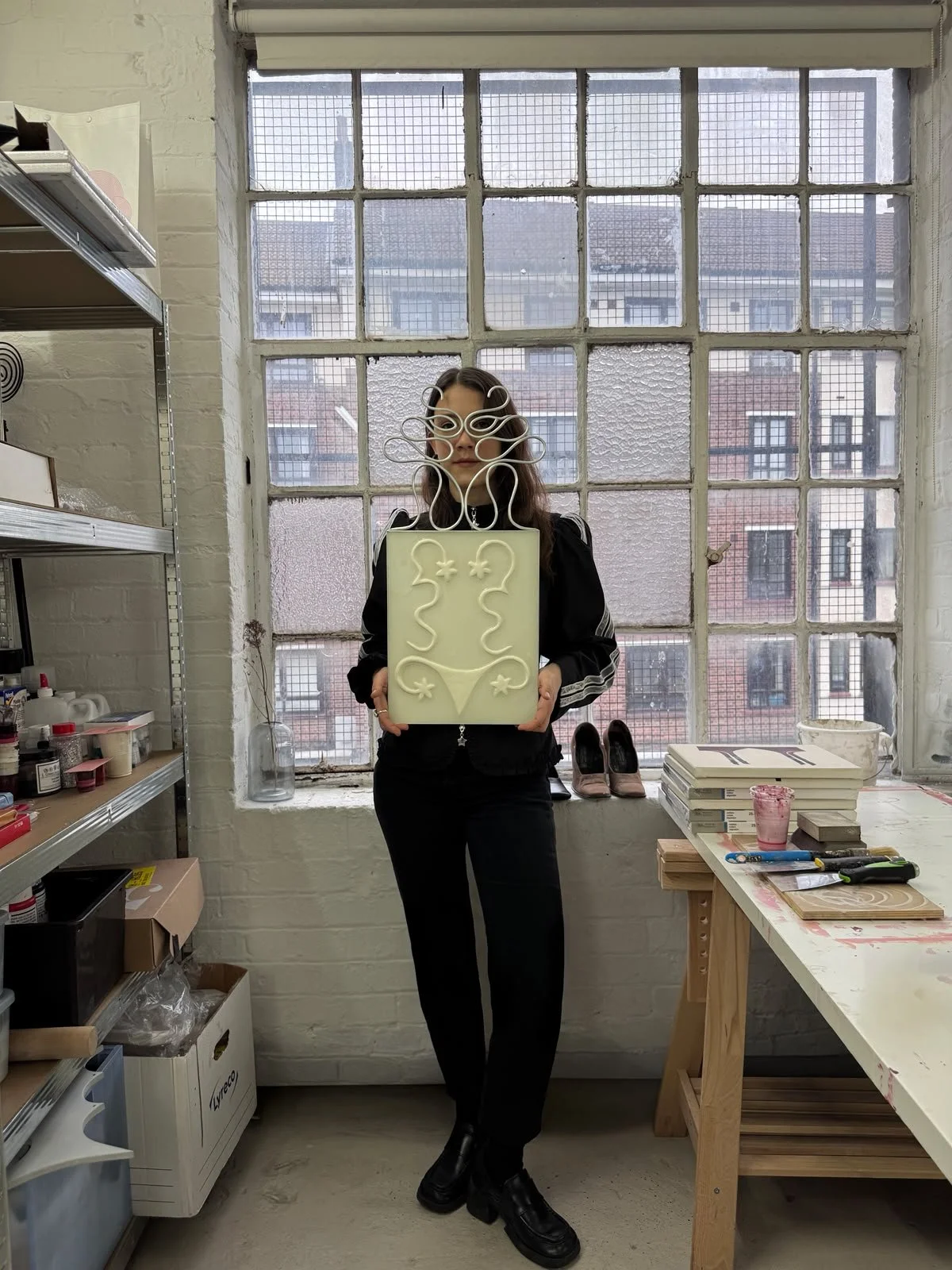
What is love to you?
I think love is feeling at home with someone or something. Its meaning changes for each person and in every situation. It’s not something solid or fixed. To me, love is about accepting someone or something fully, including their strengths, flaws, and difficult moments. It is also about accepting your own true self, with all its imperfections, and learning how to be present and compassionate within that reality.
You say that Display Fever encourages artists to embrace their 'feverish state." What does this mean in practice?
Display Fever began as a manifesto-driven political movement committed to sustaining artistic practices through community support. Its manifesto, Feverism, advocates for collectivism, intimacy, and experimentation within artistic spaces, while firmly opposing war, genocide, and exclusionary structures in the art world. As both an artist and curator navigating the challenges of producing work within these systems, I strongly connect with Feverism’s call to sustain oneself, trust one’s instincts, and create at one’s own pace. It proposes a model rooted in democratic profit and ethically funding clean money that supports artists from diverse backgrounds rather than reinforcing existing hierarchies. In practice, this means prioritising collaboration over competition, building supportive and equitable spaces, and creating intimate exhibitions that counteract the isolating and often elitist nature of traditional gallery systems. Feverism encourages artists to engage with socio-political realities, to respect and uplift their peers, to expand accessibility, and to actively challenge oppressive structures embedded within cultural institutions. To be in a “feverish state” is to believe in yourself and in your community without relying on the validation of the very systems that attempt to marginalise or silence you. It is a state of conviction, solidarity, and creative intensity that exists beyond institutional approval.
Tell me more about feverism. What are you like in your most feverish state?
Feverism resonates deeply with my personal journey. It reflects both the struggles I’ve faced and the values I strive to uphold in my artistic practice. To me, being an artist is not a material condition; it is an emotional and philosophical stance. It involves accepting a certain distance from society’s expectations and prioritising passion over financial security. In today’s capitalist system, particularly within the fast-paced culture of social media, we are constantly encouraged to measure ourselves against others’ achievements. This comparison can be exhausting and destabilising. Working with experimental media outside traditional forms of expression makes the challenge even greater, as the system is not designed to accommodate practices that don’t fit established categories. Most galleries and museums continue to prioritise painting, leaving limited space for experimental or interdisciplinary work. As a result, many talented artists are forced to abandon their practice to survive financially, and when survival becomes the priority, the time and energy available for creation diminish.
My most feverish state occurs when I reconnect with that inner belief. It is when I step outside external validation, trust my own voice, and remain honest in what I express. Sustaining an artistic life, for me, is an exercise in endurance; it is about not quitting, continuing despite instability, and embracing the fluctuating nature of creativity. Some days you feel invincible; other days, completely defeated. Feverism, for me, is about embracing that fluctuation: understanding the highs and lows, continuing to create, believing in your own vision, and standing in solidarity with others who move through the world with the same intensity and fire. Finding joy in the journey itself, rather than fixating on the outcome.
Display Fever promotes "collaboration, solidarity and safe networking." What does safe networking mean in an art context?
Within the current economic conjuncture, nepotism and gatekeeping make it increasingly difficult for artists from diverse backgrounds to emerge. The art world often operates through elitist structures, raising critical questions about who gets to define what is considered “valuable” art and why. In many ways, the system reinforces class divisions that restrict certain practices from flourishing.
As a result, networking becomes fragmented. There are multiple “art worlds” operating in parallel, and those in positions of visibility or influence can often feel unreachable. When exhibiting in galleries appears to depend largely on who you know rather than what you create, it inevitably leads artists to question both themselves and the system. For Display Fever, safe networking means creating spaces where connection is not determined by class, status, or access to elite circles. It means building environments where artists can meet, exchange ideas, and support one another without hidden hierarchies or transactional pressure. Safe networking prioritises sharing over self-promotion, mutual growth over competition, and genuine dialogue over strategic positioning. It is about cultivating trust, a space where artists can be vulnerable, experimental, and politically honest without fear of exclusion or exploitation.
How do you select artists for Display Fever? Is there an application process, or do you invite individuals?
For me, the process begins with genuine connection. I first build friendships with artists, have real conversations, and share experiences and struggles. Over time, when I feel someone resonates with this “feverish state,” I invite them into the community. To be part of Display Fever, you need the courage to be honest and vulnerable to engage deeply with your practice and with others.
I also consider their style of work. Each artist I include brings an experimental approach and a unique way of creating that distinguishes them from everyone else. I try to avoid rigid application processes or open calls, which can be time-consuming and often feel like a form of rejection, something I personally dislike. Instead, I cultivate a circle of artists whose practices align with the spirit of experimentation, while also maintaining a balance of different disciplines, backgrounds, and perspectives. For me, it’s not about exclusivity; it’s about building a supportive, dynamic, and diverse network where experimentation and collaboration can flourish.
Is there tension between running a platform that supports other artists and maintaining your own practice?
Not at all. I absolutely love working with other artists and sharing ideas. Since completing the Curating MFA at Goldsmiths, I’ve been working on both curating and making art, and I can’t prioritise one over the other. I’ve reached a point where I’ve found a way for the two to feed each other; when I focus on only one, something always feels missing. The conversations I have with other artists constantly inspire and energise me. I can’t imagine spending all my time alone in a studio, and I also can’t imagine myself only curating. Over time, my practices have become intertwined, almost like a single, integrated way of working. The only challenge was finding a balance and structuring my schedule accordingly. But with practice, I’ve learned how to manage both, and the two now complement and strengthen each other.
You've gone from performance artist (Panicattack Duo, Bloomberg New Contemporaries 2018) to curator and platform founder. Was that a natural shift? What prompted it?
I spent ten years creating performance art with my collaborative collective, Panicattack Duo, alongside Emily Demetriou. That work already embodied many of the strengths I now use as a curator and platform founder — collaboration, experimentation with media like sculpture and installation, and immersive experiences. But being in a constant performance state was emotionally demanding; on stage, you don’t act or sing, you embody your true self. Over time, I began to feel limited in expressing myself when I didn’t want to put my body out there so intensely. Performance art is often non-commercial, born on the streets, and can be difficult for audiences to fully understand, with inherent boundaries between performer and viewer. I have immense respect for performance artists and how they continue to push their practice despite these challenges.
Transitioning to curating and running Display Fever felt natural because it allowed me to explore my artistic instincts in new ways, deepen my understanding of other practices like painting or installation, and carry forward the core energy of Panicattack Duo. Emily is also an activist-artist collaborator. We have already curated many shows together, and in a way, we both use curation in our own practice, incorporating different media, narratives, and stories, and even curating each other. She has taught me a lot about reading current social movements and given me a perspective on how to navigate my own voice. I think Display Fever carries a lot of the same energy and core elements that came from Panicattack Duo.
You're interested in "unconventional places where exhibitions don't typically happen." What possibilities can unconventional spaces afford art and artists?
For me, the site-specificity of a space is crucial to how art is interpreted. Confining artwork to a traditional “white cube” often situates it within a commercial framework, which can limit its impact. Art is organic and alive, and throughout history, many important movements emerged outside conventional spaces. By combining artwork with unconventional sites, the narrative of an exhibition becomes more powerful, and the work can reach audiences on a deeper, more resonant level. Curating outside the traditional context allows the art to breathe, to connect with its surroundings, and ultimately, to become more meaningful.
You co-curated Treatment Menu with Gigi Surel. How do you split curatorial decisions? Do you have different strengths?
Absolutely. Our collaboration began very organically when Gigi visited my studio and saw a piece I was making about a breakup. She was immediately drawn to it, and that encounter sparked a conversation about curating an entire exhibition on love, since we were both questioning and exploring the theme personally.
We share a similar approach to curating, treating it almost like an extension of our own art, and embracing ideas that feel experimental or “out of the box.” We also both curate nomadically: our work isn’t confined to a single space, and we approach each site very specifically, letting the environment inform the exhibition. While we bring individual perspectives, our decisions are deeply collaborative, blending our strengths and instincts to create a unified yet dynamic vision.
References for Treatment Menu span from Byung-Chul Han to Erich Fromm and bell hooks. Elsewhere, you cite Mark Fisher and Silvia Federici. What core ideas are you taking off from in their work?
The core ideas we draw from these thinkers centre on love as an active practice rather than a passive state. From Erich Fromm and bell hooks, we take the understanding that love is not a noun but a disciplined practice requiring attention, risk, vulnerability, and intentional care. Love for them is rooted in empathy, respect, and a commitment to shared growth rather than possession or status.
Building on affect theory circulating widely online, we also see love as relational and responsive, a force that shapes and is shaped by others. Byung-Chul Han and Mark Fisher help us understand how contemporary capitalism diminishes eros, compressing desire into productivity, self-optimisation, and commodified connection. Under these conditions, both vulnerability and relationality become acts of resistance: caring for one another becomes a refusal of competition, alienation, and performative self-branding.
In Treatment Menu, we reimagine the gallery as a beauty salon, where love, like personal care, is labour, attention, and ongoing effort. The exhibition insists that love must be reclaimed from narrow romantic scripts and rearticulated as practice, labour, risk, and ethical engagement. This framing aligns with the idea, popular in online communities, that care itself is political: choosing connection, tenderness, and care in a world oriented toward extraction and performance is a radical stance.
Ultimately, we see love not as an object to attain, but as a lived attitude and ongoing practice that demands time, courage, mutual support, and collective care.
Treatment Menu claims eros is "flattened by globalised capitalism." How does making an art exhibition invite change rather than merely aestheticise the problem?
Treatment Menu addresses how eros is “flattened by globalised capitalism” by treating love and care not as abstract ideas or purely aesthetic gestures, but as active practices that can be experienced, reflected on, and shared. By reimagining the gallery as a beauty salon, a space of rituals, treatments, and attentive care, we invite participants to engage with love as labour, risk, and relationality rather than a commodified ideal.
Making an exhibition in this way goes beyond aestheticising the problem: it creates conditions for empathy, vulnerability, and reflection. Visitors witness and participate in practices that challenge transactional or performative modes of connection, emphasising the effort, attention, and courage that love and care require. The artworks embody these ideas materially, socially, and conceptually, encouraging people to think critically about how capitalism shapes desire, relationships, and selfhood and offering a glimpse of alternative modes of being.
In other words, the exhibition is not just about representing the flattening of eros; it models and enacts the practices of attention, labour, and care that resist that flattening, making the critique tangible, relational, and participatory.
The Luster was inspired by Hito Steyerl's "The Terror of Total Dasein" and critiqued "the pressure to perform constant digital presence." Why is digital performance a problem for you?
I wouldn’t say digital presence itself is the problem. It has created powerful forms of resistance and new political movements. My concern is more about its pace and the pressure of constant visibility. The expectation to always be present, producing, and performing online can become overwhelming. Life turns into content, and work becomes something to constantly display.
This environment often creates a perfectionist syndrome. We present highly curated versions of ourselves, and vulnerability can lose its depth when it becomes aestheticised or performative. My issue is not with digital space itself, but with the demand for total, uninterrupted presence, a pressure that can exhaust the mind and flatten more complex, slower forms of expression. I mean, as Warhol said, one day everyone is going to be famous. Isn’t it happening right now? What if we don’t want to be famous?
Desire shows up across your exhibitions. The Luster explores desire and digital presence, Aurora Instinct reclaims desire from capitalism, Treatment Menu explores desire and love as labour. Why is desire the through-line?
Desire feels like the through-line because it is one of the strongest forces shaping contemporary life. The entire social media ecosystem operates through desire — it constantly produces it, amplifies it, and redirects it. We are encouraged to desire objects, people, lifestyles, validation. It becomes a mechanism that guides attention and behaviour.
If we look historically at social movements and the evolution of capitalism, we can see how desire has been reshaped. Capitalism has accelerated access, the idea that you can have, reach, or become something instantly. This immediacy changes our relationship to longing, belonging, love, and even labour. Effort becomes compressed, and value becomes tied to visibility and speed.
Across the exhibitions, we keep returning to desire because it sits at the centre of these transformations. It influences how we connect, how we work, how we love, and how we imagine ourselves. By examining desire, we are really questioning who shapes it, who benefits from it, and whether it can be reclaimed from purely capitalist logic.
Aurora Instinct describes desire as a visceral rhythm and collective lustre that resists techno-capitalist relations. Is that aspiration or description? Do you think desire actually resists capitalism?
For me, it is more of an aspiration. Lately, thinking about desire, what it really means and how to practice it, feels chaotic. Desire today is not pure or autonomous; it is often shaped and redirected by capitalism.
As Mark Fisher argues, capitalism does not repress desire; it produces and organises it. What we experience as personal desire is frequently already structured by market logic.
However, when desire becomes collective rather than individual, something shifts. Shared longing or collective intensity can create moments that are not immediately reducible to consumption. In that sense, desire does not automatically resist capitalism, but it may open small spaces of friction within it.
So Aurora Instinct proposes not a reality, but a possibility: that desire, practised collectively, might move differently.
Your past performance work includes ‘Nothing Really Mattress’ (Bloomberg New Contemporaries), ‘Their Blood’ with Giulio Dal Lago (25-minute live performance with installations, sound, video), and TIDES Sound Art (hybrid event between live art, performance, dance music). Your recent curatorial work is quieter, with exhibitions in galleries and retail spaces. Do you miss the body, the more chaotic elements?
I think my performance work belongs to my younger practice (laughs). Back then, there was more energy to release, more things to express bodily. Performance also gave me the chance to experiment with different methods and media, which ultimately shaped where I am today. I wouldn’t change the way it all started; it feels like it had to happen. Now, as I’m a bit older, my practice has taken on calmer forms. But that doesn’t mean I won’t perform again in the future. Performance still lives deeply in my heart, and it will resurface when it feels necessary. I also think that creating calmer, quieter moments in your work is important; it allows you to later engage with the chaotic, physical, and collaborative aspects of performance with more focus and intention. At the end of the day, life itself is a performance!
What's next for you?
I’ll be focusing more on my art practice and spending more time in the studio, developing my work with greater concentration. This fall, I’m preparing for a duo exhibition with another artist, which I’m really looking forward to.
Display Fever will continue at a slower pace, but we’re also excited about our first show in September in Istanbul. At the same time, I’ll be working on further developing and sharing the Feverism manifesto.
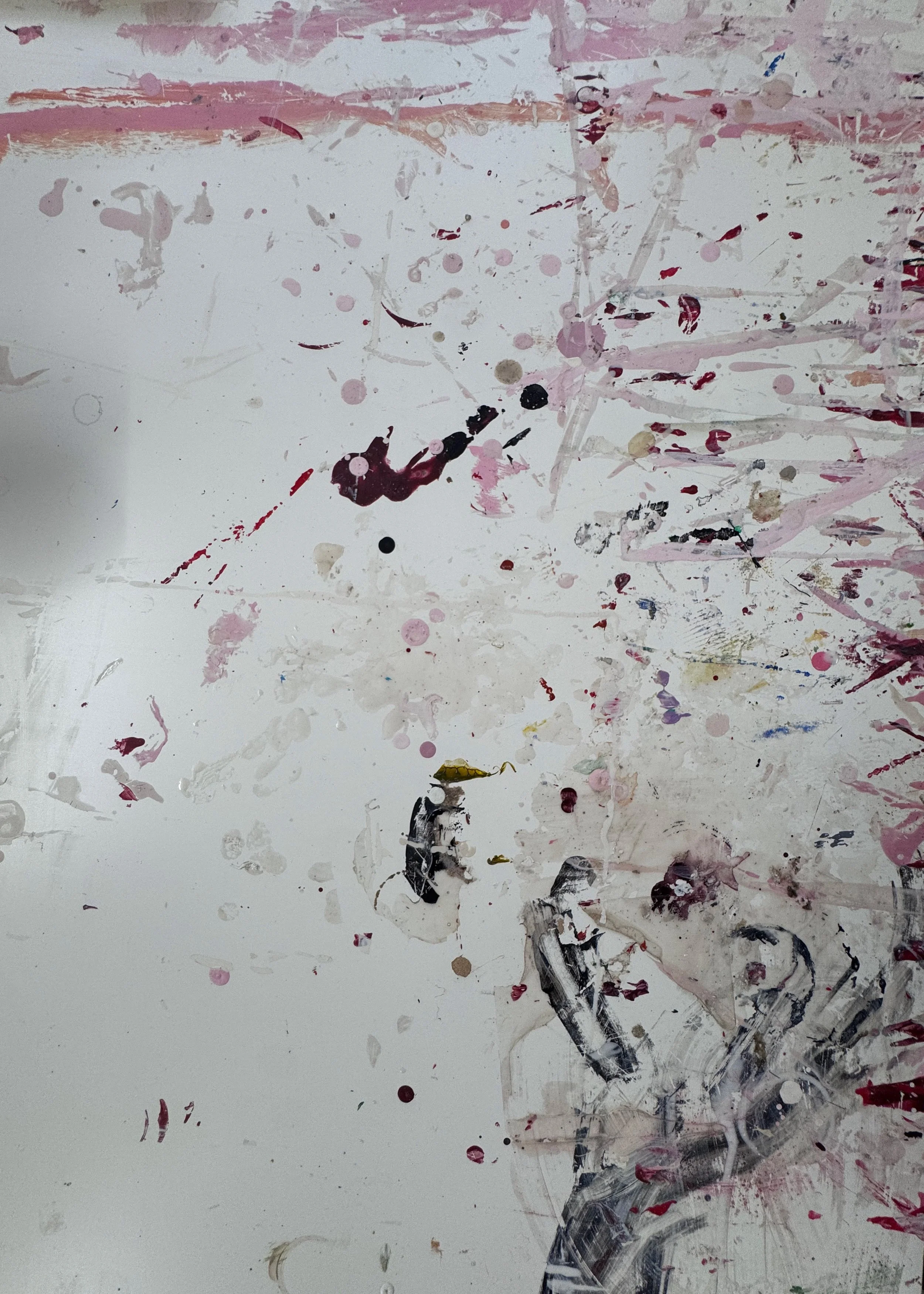
Artist @nazbalkaya